
Tanzania produces an estimated 600,000 to 700,000 tonnes of tomatoes annually, making it one of the most widely grown horticultural crops in the country. However, due to poor transportation networks, long distances from rural farms to urban markets, and limited storage or preservation facilities, between 30% to 50% of harvested tomatoes are lost after harvest. This means that roughly 180,000 to 350,000 tonnes of tomatoes go to waste each year, representing a major economic loss for farmers. In peak seasons, oversupply forces prices to drop by as much as 60%–80%, leaving many farmers with little to no profit.
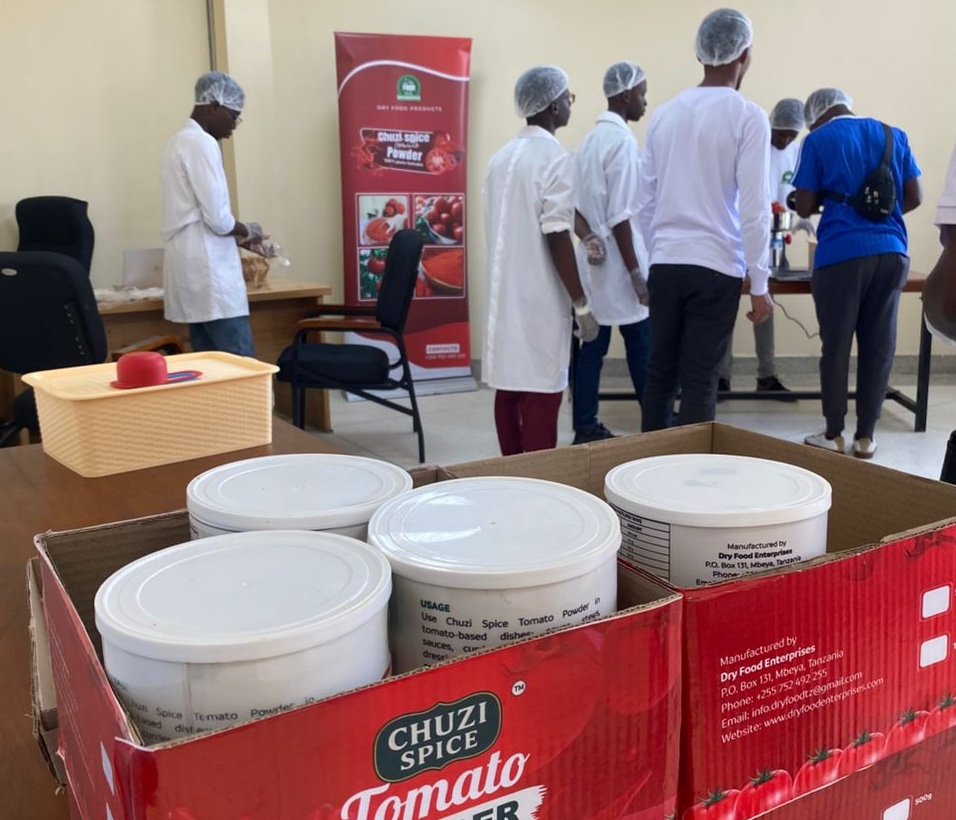
In the Mbeya region, Dry Food Enterprise is stepping in to change this narrative by transforming how tomatoes are valued and utilized. Founded by Justine Bahati, alongside Chief Operating Officer Keneth, the company focuses on adding value to surplus tomatoes by converting them into tomato powder. This simple yet impactful innovation addresses one of the biggest challenges farmers face: what to do with excess or unsold produce that would otherwise rot. By purchasing tomatoes in bulk directly from farmers, the enterprise ensures that harvests are not wasted and that farmers receive a more stable source of income.
The process begins with sourcing fresh tomatoes from local farmers, especially during peak harvest seasons when supply exceeds market demand. Instead of allowing these tomatoes to perish, Dry Food Enterprise processes them through drying and milling techniques to produce a fine tomato powder. This powder retains the flavour, colour, and nutritional value of fresh tomatoes while offering a longer shelf life and easier storage. The transformation not only preserves the product but also enhances its versatility for different culinary and commercial uses.
What makes this tomato powder particularly valuable is its convenience and efficiency. Unlike fresh tomatoes, which are highly perishable and bulky to transport, powdered tomatoes are lightweight, compact, and can be stored for extended periods without refrigeration. Dry Food Enterprise has tapped into this demand by supplying its products through a business-to-business model, serving hospitality clients as well as distributing to local retail shops.
By introducing a processing stage between production and consumption, Dry Food Enterprise ensures that tomatoes maintain economic value even after their fresh market window has passed. Farmers benefit from reduced losses and more predictable earnings, while consumers and businesses gain access to a practical and high-quality alternative to fresh produce. This approach not only minimizes waste but also contributes to a more resilient and efficient food system.
Dry Food Enterprise has also been actively showcasing its innovation beyond Mbeya. By participating in exhibitions and agricultural events, the company is raising awareness about the importance of value addition in agriculture. These platforms have allowed them to connect with potential partners, customers, and stakeholders, while also inspiring other entrepreneurs to explore similar solutions in different agricultural sectors. Their presence in such events reflects a growing recognition of the role small and medium enterprises play in driving agricultural transformation.
At its core, the story of Dry Food Enterprise is one of turning loss into opportunity. What was once a major challenge for tomato farmers is now being reimagined as a source of value and innovation.
As Tanzania continues to have challenges with post-harvest losses across various crops, initiatives like these offer a blueprint for sustainable progress. By investing in value addition and embracing simple processing technologies, the agricultural sector can unlock new economic potential while addressing long-standing inefficiencies. Dry Food Enterprise stands as a powerful example of how local innovation can solve local problems and in doing so, create impact that reaches far beyond the farm.