
Tanzania is home to thousands of kapok trees, particularly in coastal regions such as Lindi, Mtwara, and parts of the southern corridor, where they naturally thrive in dry forest ecosystems. However, for decades, these trees have been largely undervalued, with an estimated 40% to 60% of kapok trees being cut down or burned for land clearing, charcoal production, or simply ignored due to a lack of awareness of their economic value. This widespread loss has contributed to deforestation, reduced biodiversity, and missed economic opportunities for local communities.
Kapok trees play an important environmental role in supporting soil health and ecosystem balance, hence making their conservation not only an ecological priority but also a potential source of sustainable income when properly utilized.
In the Lindi region, a new approach to this overlooked resource is taking shape through Kapok Collective, an initiative founded by Maliehaa Sumar. Kapok Collective recognizes both the environmental and economic potential of kapok trees. She has built a model that transforms what was once considered waste into high-value products. Instead of allowing the trees to be cut down or burned, her work focuses on harvesting kapok fruits sustainably and turning them into materials used in furniture production, particularly for the hospitality industry.
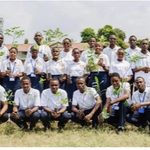
The process begins in Ng’apa district in Lindi, where local communities are actively involved in harvesting kapok fruits. The harvested kapok is then processed, cleaned, and packaged before being transported to Dar es Salaam, where further production takes place. Kapok Collective has created employment for 20 local residents, including 8 women and 12 men, who are engaged in various stages of the value chain.
For many of these individuals, Kapok Collecrive represents a new and reliable source of income tied directly to environmental conservation. It demonstrates how sustainable practices can generate jobs while preserving natural resources, rather than depleting them.
Beyond its commercial success, Kapok Collective stands out for its role in reshaping perceptions around natural resources and forests. By working closely with local communities and government officials, Maliehaa Sumar has helped build awareness about the importance of preserving kapok trees, encouraging a shift away from destructive practices like burning and deforestation.
At its core, the story of Kapok Collective is about redefining value, not just in economic terms, but in environmental and social impact. By protecting kapok trees and turning them into a sustainable business, the initiative is contributing to forest conservation, reducing deforestation pressures, and creating meaningful opportunities for local communities. It is a reminder that the future of development lies not in exploiting resources, but in using them wisely and sustainably.