
Tanzania’s demand for fresh vegetables continues to rise, driven by population growth, expanding urban markets, and a booming hospitality industry, particularly in tourist destinations. Yet supply challenges remain persistent. Seasonal shortages, high transportation costs, post-harvest losses, and dependence on imports from distant regions often push prices upward and limit consistency in quality. In island economies like Zanzibar, where arable land is limited and logistics add further complexity, the pressure to secure reliable, affordable produce is even greater. Against this backdrop, alternative farming methods are emerging as practical solutions capable of stabilizing supply while reducing costs.
In Zanzibar, one such solution is being pioneered by Aatif Aquaponics Limited, a company redefining how vegetables can be grown without soil. The enterprise specializes in hydroponic farming, a technique where crops are cultivated using nutrient-rich water circulating through a closed system of pipes. Instead of traditional fields, rows of vibrant greens flourish in carefully designed channels, sustained by continuously recycled water. This approach not only conserves resources but also allows for high-density cultivation within relatively small spaces.
At the center of this innovation is Mr. Rashid Ally Rashid, the founder and currently the only farmer operating this type of hydroponic system in Zanzibar. His work stands as a striking example of how technology and creativity can intersect with agriculture. In an environment where conventional farming faces land and climate constraints, his soil-free model demonstrates that productivity does not have to depend on large tracts of land. Water becomes the growing medium, and efficiency becomes the guiding principle.
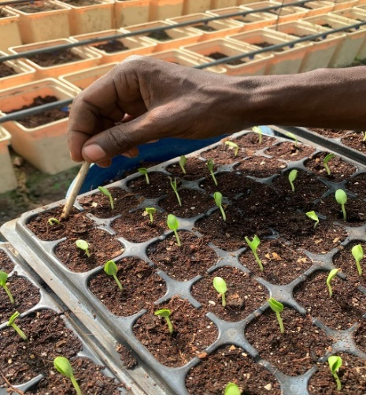
Walking through the farm reveals a landscape that challenges expectations. Instead of soil beds, networks of pipes carry gently flowing water that delivers nutrients directly to plant roots. Vegetables such as lettuces, peppers, mint, rosemary, and cherry tomatoes grow in neat, controlled arrangements. The system minimizes water waste through recirculation and reduces exposure to soil-borne diseases. The result is cleaner produce, faster growth cycles, and predictable qualities that are increasingly valuable in modern food supply chains.
Beyond innovation, the venture carries a strong social impact. Aatif Aquaponics Limited has created employment opportunities for five young men who work within the farm’s daily operations, managing plant care, monitoring systems, and ensuring smooth production. In addition, nearly twenty women are engaged in harvesting activities conducted twice a week, on Mondays and Thursdays. These structured harvesting days provide consistent income opportunities, illustrating how even a compact, technology-driven farm can generate meaningful livelihoods within the community.
For the women involved, the farm represents more than temporary work; it offers financial stability and participation in a forward-looking agricultural model. Regular harvesting schedules allow them to plan around other responsibilities while earning reliable wages. In many rural and peri-urban contexts, such predictable opportunities are rare, making the initiative particularly significant in supporting household resilience and women’s economic empowerment.
The farm’s production is closely tied to Zanzibar’s hospitality sector. Aatif Aquaponics Limited supplies a range of high-quality vegetables including rosemary, mint, cherry tomatoes to several hotels across the islands. These “fancy vegetables,” often associated with gourmet dining and international cuisine, would otherwise be transported from mainland Tanzania at higher cost. By sourcing locally, hotels gain fresher products at more competitive prices, while reducing dependence on lengthy supply chains vulnerable to delays and spoilage.
Hydroponic farming also presents an appealing proposition for entrepreneurs and business-minded individuals. Compared to traditional agriculture, it requires less land, uses water more efficiently, and can deliver rapid harvest cycles. With production schedules allowing harvesting multiple times per week, revenue streams become more frequent and predictable.
The story of Aatif Aquaponics Limited is therefore not only about growing vegetables but about reimagining agriculture in constrained environments. It reflects a shift toward smarter resource use, shorter supply chains, and employment creation rooted in innovation. In a region where agriculture remains a cornerstone of livelihoods, such models offer a glimpse into a future where technology enhances resilience rather than replacing tradition.
As Zanzibar continues to balance land limitations with growing food demand, ventures like this highlight the potential of soil-free farming systems. By combining efficiency, sustainability, and community impact, Mr. Rashid Ally Rashid’s initiative stands as a powerful reminder that the next agricultural revolution may not be about expanding land, but about transforming how we use it.