In 1983, the world’s first 3D-printed object was a small, black plastic eyewash cup. More than four decades later, this same technology builds everything from toys to home decor and even houses. In Tanzania, Roverlabs is putting 3D printing to one of its most meaningful uses yet, helping people with orthopaedic conditions move, heal and live more comfortably.
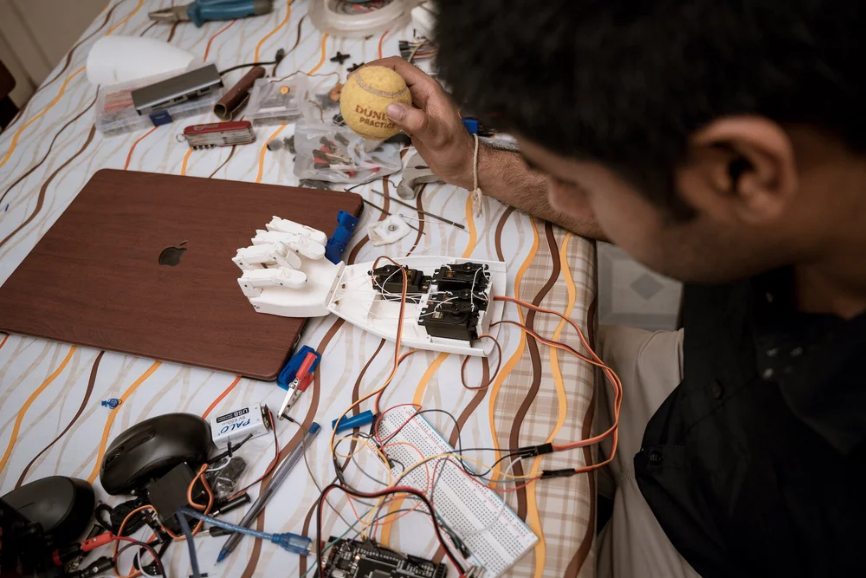
Dr Atish Shah working on Roverlabs innovation – Mkono-1
Founded by innovator Dr Atish Shah, Roverlabs is the first company in Tanzania to 3D print customised orthotic devices. These devices support orthopaedic recovery from fractures, contractures, arthritis, tendinitis, carpal tunnel syndrome, foot drop, cerebral palsy, stroke-related paralysis, ligament injuries and sprains. They also provide facial and skull protection, including for contact sports.
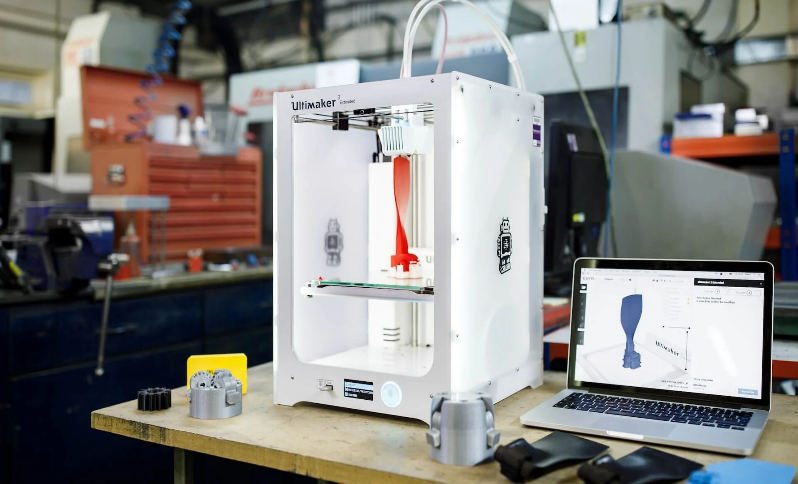
3D Printing Machine at Roverlabs printing an orthotic device
What sets Roverlabs apart is how its devices are made. Instead of messy plaster of Paris (POP) moulds, which often happens when receiving a new cast, Roverlabs uses 3D scanning to capture the exact shape of a patient’s limb, then prints and customises a device built precisely for them. The process is faster, cleaner and more accurate, and the result outperforms traditional casts.
Roverlabs devices are lighter, so patients can move more freely; breathable, reducing skin irritation; completely waterproof, so daily life doesn’t stop; and adjustable, adapting as the patient heals.
For patients, this means less discomfort and a better recovery journey. But looking at it on a national scale, this means we have advanced orthopaedic technology designed and printed locally in Tanzania.
Kijana Leo is part of the Jakaya Mrisho Kikwete Foundation’s (JMKF) Skills for Employment (S4E) pathway, which works toward a future where adolescents and youth are skilled, motivated and healthy. Through S4E, the Foundation equips young people with the tools and resources they need for long-term success.
By convening partners, building capacity and scaling proven solutions, JMKF champions young, innovative entrepreneurs like Dr Atish Shah, helping them grow ventures that create decent work and solve real problems.
Today, we see a youth-led enterprise using innovation to improve health and quality of life. With stories such as Roverlabs, JMKF moves closer to its goal of impacting 600 communities and 6 lives in Tanzania.