Tanzania is home to one of the largest livestock populations in Africa, with millions of cattle, goats, and sheep supporting rural livelihoods, nutrition, and national economic activity. Yet behind these impressive numbers lies a persistent challenge: every year, farmers lose countless animals to diseases that could have been prevented or treated if detected early. Delayed recognition of symptoms often leads to higher mortality rates, reduced productivity, and increased treatment costs, placing a heavy burden on livestock keepers and the wider agricultural sector.
In Morogoro, a young Tanzanian innovation company is working to change this narrative by bringing digital intelligence directly to the pasture. Afya Ya Mnyama Digital, founded in 2023 by Marco Mabula and Julie Dorah, both alumni of Sokoine University of Agriculture (SUA), has developed a technology-driven solution designed to transform how farmers monitor and protect the health of their animals. Their flagship innovation, an application known as Mnyama Check, integrates wearable sensor technology with mobile data analytics to provide farmers and veterinary professionals with early warnings about potential health issues and reproductive changes in livestock.
The concept behind Mnyama Check is both simple and revolutionary. Small sensors are attached to animals such as cows, goats, and sheep, where they continuously collect biological and behavioural data. These sensors monitor patterns that are often invisible to the human eye, subtle shifts in temperature, movement, feeding habits, and activity levels that can indicate the early stages of illness. Instead of waiting for visible symptoms to appear, farmers receive alerts that signal potential problems before they escalate into serious disease. This shift from reactive to preventive care represents a fundamental change in livestock management.
Beyond disease detection, the system also provides another crucial advantage: early identification of pregnancy. For livestock keepers, knowing when an animal is pregnant is vital for planning nutrition, care, breeding schedules, and financial expectations. Traditionally, pregnancy detection can be delayed, inconsistent, or reliant on costly veterinary visits. With sensor-based monitoring, farmers gain faster and more reliable insights, enabling them to manage their herds more efficiently and reduce uncertainties associated with reproduction.
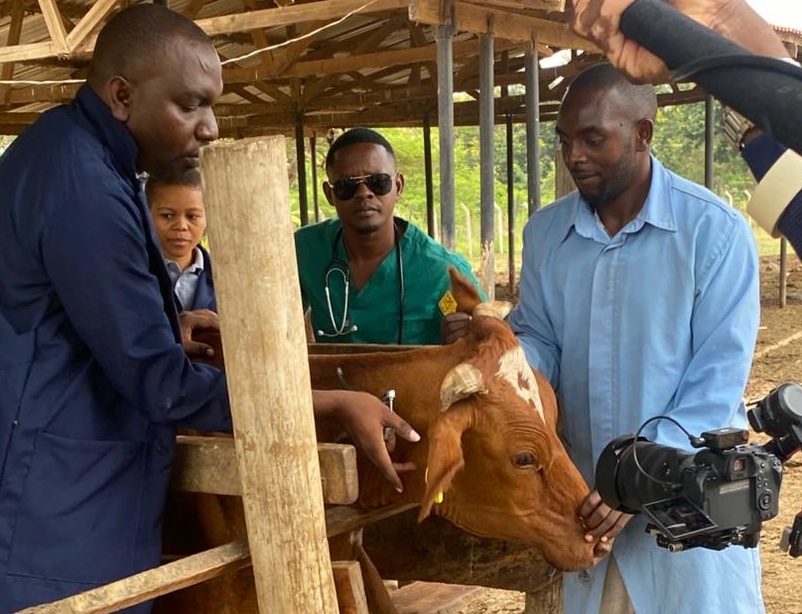
What sets Afya Ya Mnyama Digital apart is not only the technology itself but the ecosystem built around it. The company has already deployed more than 6,000 sensors on animals across several regions of Tanzania, reflecting both growing demand and trust among farmers. This expansion has been supported by a network of 200 veterinary freelance doctors engaged by the company. These professionals serve as the human bridge between digital alerts and real-world intervention, working closely with livestock keepers to install sensors, interpret health data, provide medical support, and supply essential veterinary drugs.
For many veterinary professionals, this model has also created new economic opportunities. Freelance doctors working with Afya Ya Mnyama Digital are able to expand their reach, access more clients, and operate within a system that connects them directly to farmers who need timely assistance. In turn, farmers benefit from faster access to expertise and treatment, reducing the delays that often worsen animal health outcomes. The relationship becomes mutually reinforcing: technology enhances efficiency, while professional care ensures meaningful action.
Farmers using Mnyama Check have begun experiencing tangible benefits. Early disease alerts allow for quicker treatment, often preventing conditions from becoming fatal or severely debilitating. Healthier animals translate into improved milk production, better growth rates, and stronger breeding performance. Treatment costs are reduced because interventions occur earlier, when illnesses are easier and cheaper to manage. The system also minimizes unnecessary drug usage, helping farmers avoid waste and contributing to more responsible veterinary practices.
At a broader level, innovations like Mnyama Check speak to a larger transformation taking place within Tanzania’s agricultural landscape. As digital technologies become more accessible, sectors traditionally viewed as low-tech, including livestock keeping are finding new pathways toward modernization and resilience. Afya Ya Mnyama Digital demonstrates how locally developed solutions, grounded in an understanding of farmers’ realities, can deliver practical impact where it matters most: in the daily survival and success of rural communities.
The story of Afya Ya Mnyama Digital is also a testament to the role of young African innovators in solving homegrown challenges. Rather than importing expensive foreign systems, Marco Mabula and Julie Dorah have designed a solution tailored to Tanzanian conditions, farmer behaviours, and infrastructure limitations. Their journey from university training at SUA to building a scalable technology enterprise highlights the power of education, entrepreneurship, and innovation when aligned with real societal needs.
As livestock diseases continue to threaten productivity and farmer incomes, early detection technologies may become an essential pillar of sustainable animal health management. With thousands of sensors already active and a growing network of veterinary professionals on the ground, Afya Ya Mnyama Digital is positioning itself at the forefront of this shift.
In doing so, the company is not only protecting animals but safeguarding livelihoods, strengthening food systems, and redefining what the future of livestock care in Tanzania can look like.