In the quiet village of Genge Sita, tucked within Kizengi Ward of Tanzania’s expansive Uyui District, a remarkable tale unfolded on June 10, 2025.This wasn’t fiction. It was flesh, blood, and the beating heart of community health at work.
A 28-year-old mother named Anna was expecting her second child, or so she thought. What began as a typical pregnancy turned into a life-threatening emergency, and ultimately, a heartwarming celebration of new life—three lives, to be exact. It was the Jamii Salama (“Safer Communities”) Project, implemented by the Jakaya Mrisho Kikwete Foundation (JMKF) in partnership with the Government of Tanzania and funded by S.C. Johnson and Son Company, that stood as the lifeline between peril and possibility.
On March 18, 2025, Anna, visibly pregnant and accompanied by her husband, entered a mobile clinic organized by the Jamii Salama Project. She was just over seven months along and, like many women in her village, had limited access to consistent antenatal care. Her checkup quickly raised alarms. Although other indicators were stable, she was immediately given essential supplements, a treated mosquito net, and a delivery preparation kit— that magical grab bag of life-saving essentials for rural expectant mothers.
Then came the ultrasound. What the device revealed wasn’t just a double surprise—it was a triple bundle of joy. Anna was carrying triplets. And while the couple blinked in disbelief, the regional coordinator and field officer quickly stepped in, recommending immediate referral to a higher-level health facility. Anna’s referral card was stamped with urgency:
Fast forward to the early hours of June 10, 2025, labour pangs began before sunrise. With the nearest dispensary 16 kilometres away and Tabora Regional Hospital 120 kilometres further, Anna’s husband did what many rural men do—he fetched a bicycle. They didn’t get far. Anna could no longer move. Labour was in full swing, and help was nowhere in sight. In the nearby home, there was a young clinical officer graduate with no fancy equipment but just knowledge, courage, and a pair of steady hands.
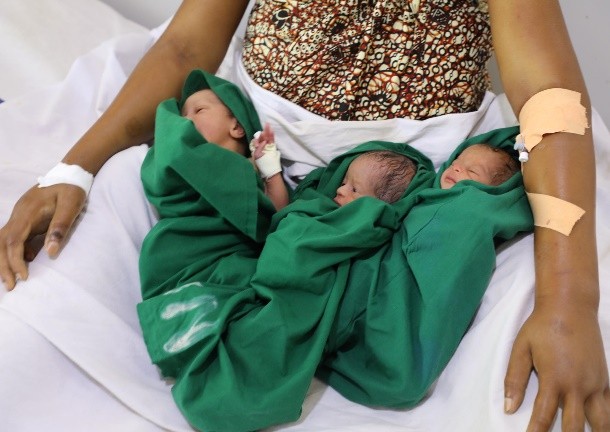
At exactly 6:00 am, one boy and two girls were delivered. Three lives brought into the world—healthy, screaming, and full of potential. But the miracle was only half done. Anna, the strong mother, began to falter. She was slipping into eclampsia—the silent killer of pregnant women.
A community health worker made the alert call to Jamii Salama’s emergency response team, and by 10:00 am, the team was there. Their first sight? A woman seizing, drenched in sweat. They supplied her with fluids and then transported her using Jamii Salama outreach vehicles
By 6:00 PM, Anna arrived at Tabora Regional Hospital—barely conscious but breathing. Nurses and doctors took over with skill and urgency. Her blood level was low. She was immediately given a blood transfusion that brought her back from the edge.
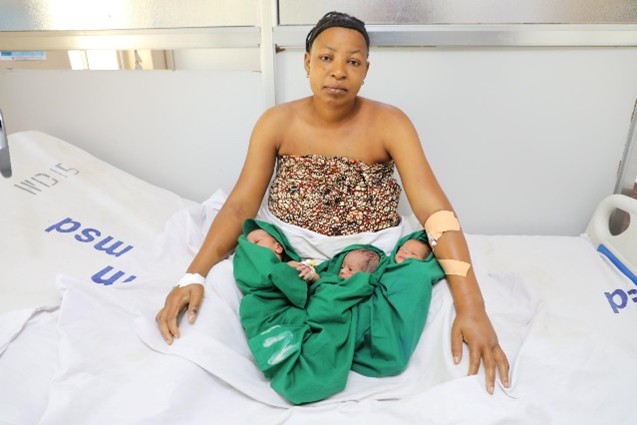
Meanwhile, the triplets were whisked into the neonatal intensive care unit for close monitoring. By June 12, 2025, Anna had stabilized, smiling softly as nurses brought her babies for a visit. The NICU staff gave a glowing report. And for the first time in days, the family exhaled.
And in true Tanzanian tradition, names were given not just for identity, but for meaning. The second-born boy was named Jakaya-Doto, honouring Dr. Jakaya Mrisho Kikwete, the foundation’s visionary settlor and Chairman. The first-born girl was named Marcelina-Kulwa, in tribute to the Regional Coordinator, whose diligence and commitment quite literally saved their lives. The third-born girl was named Shija, a nyamwezi name meaning “third born”—a quiet, powerful nod to her mother’s resilience.
This isn’t just the story of Anna. It’s the story of thousands of women across Tanzania. Women who live far from hospitals. Women who give birth on dirt floors. Women whose fates hang on a phone call answered or not. Jamii Salama, through its mobile outreach, field officers, and emergency response, turned what could have been a maternal tragedy into a triple victory.